Press

Topography of Emotions: Faces and Streets”

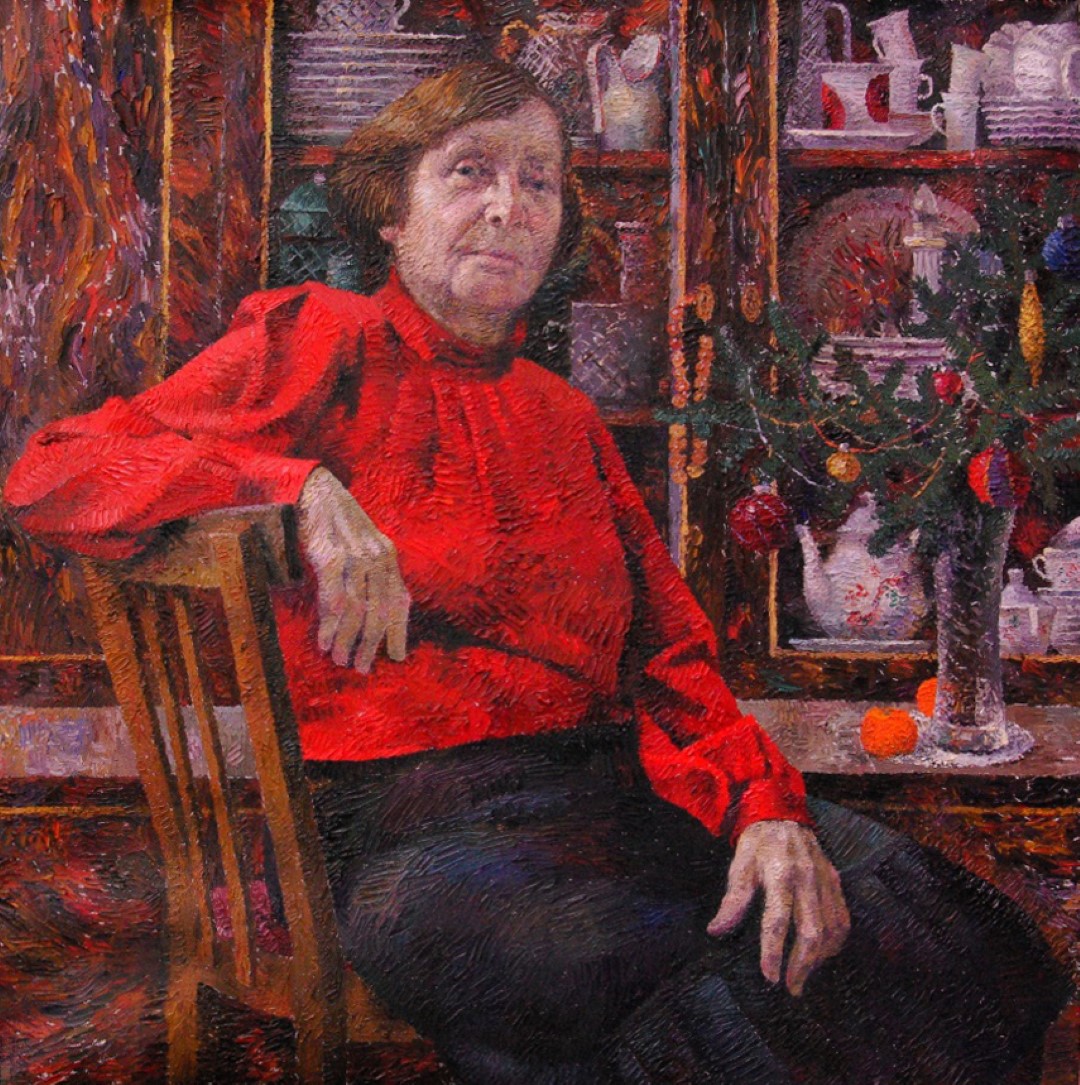
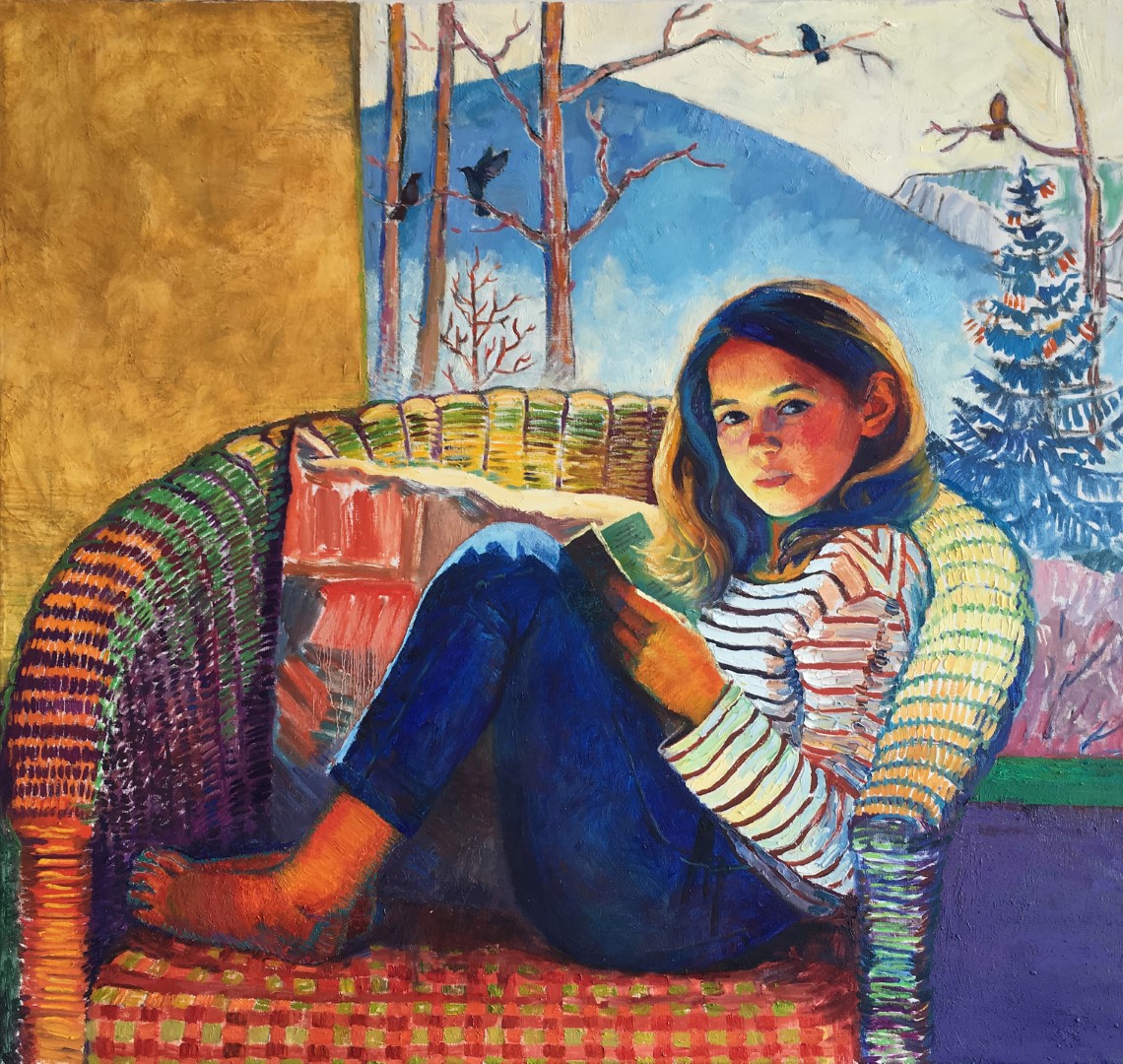
Painter Natasha Bakovic presents the first part of the exhibition title Topography of Emotions. She represents a rare phenomenon among artists, creating beyond the borders of her home country. The figures she portrays most often appear within intimate domestic interiors—both in Croatia and in France. They are frequently depicted in moments of contemplation, emotionally sensitive and aware of the transience of time, yet equally conscious of the invaluable beauty of fleeting moments of happiness.

Bakovic spent part of her youth in Russia, in Saint Petersburg, where she graduated from the St. Petersburg State Academic Institute of Painting, Sculpture and Architecture named after I. E. Repin. She later spent several years in Poland. In this sense, she can be regarded as a truly pan-European artist—one who connects the cultural sensibilities of East and West.

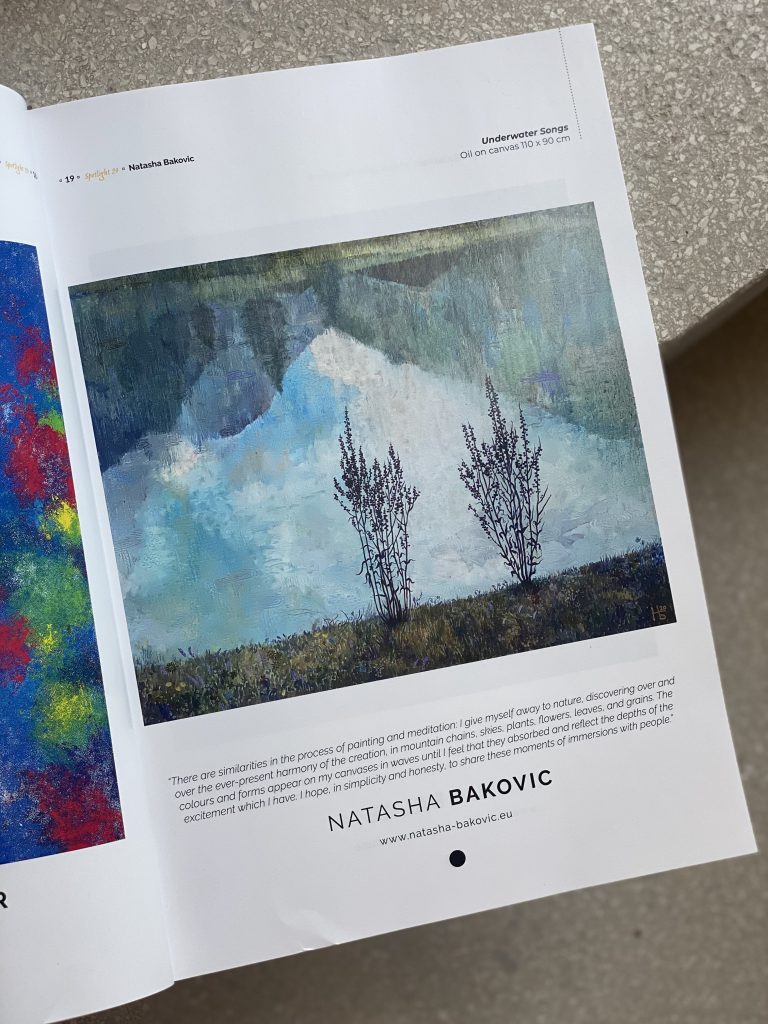
Her artistic oeuvre is devoted, on the one hand, to portraits of those closest to her—family members, friends, and acquaintances—and, on the other hand, to nature, a space in which the artist herself finds inspiration and serenity. She enjoys spending time particularly in Dalmatia during the summer and in the French Alps during the winter, where she also maintains a studio alongside her principal studio in Zagreb, where she lives and works and where she regularly organizes art workshops.

At the present exhibition in the gallery of the DLUM association, of which she is a member, titled Topography of Emotions: Faces and Streets, Bakovic presents, in addition to portraits of acquaintances, also “portraits” of streets, cities, and places that remain deeply engraved in her memory—places that recall beautiful moments experienced there.

The interiors in her paintings frequently open toward an exterior space, establishing a dialogue with the outside world—much like Baroque portraiture in which interior scenes communicate with landscapes beyond. It is as though the portrayed figures inhabit several spatial and temporal dimensions simultaneously.

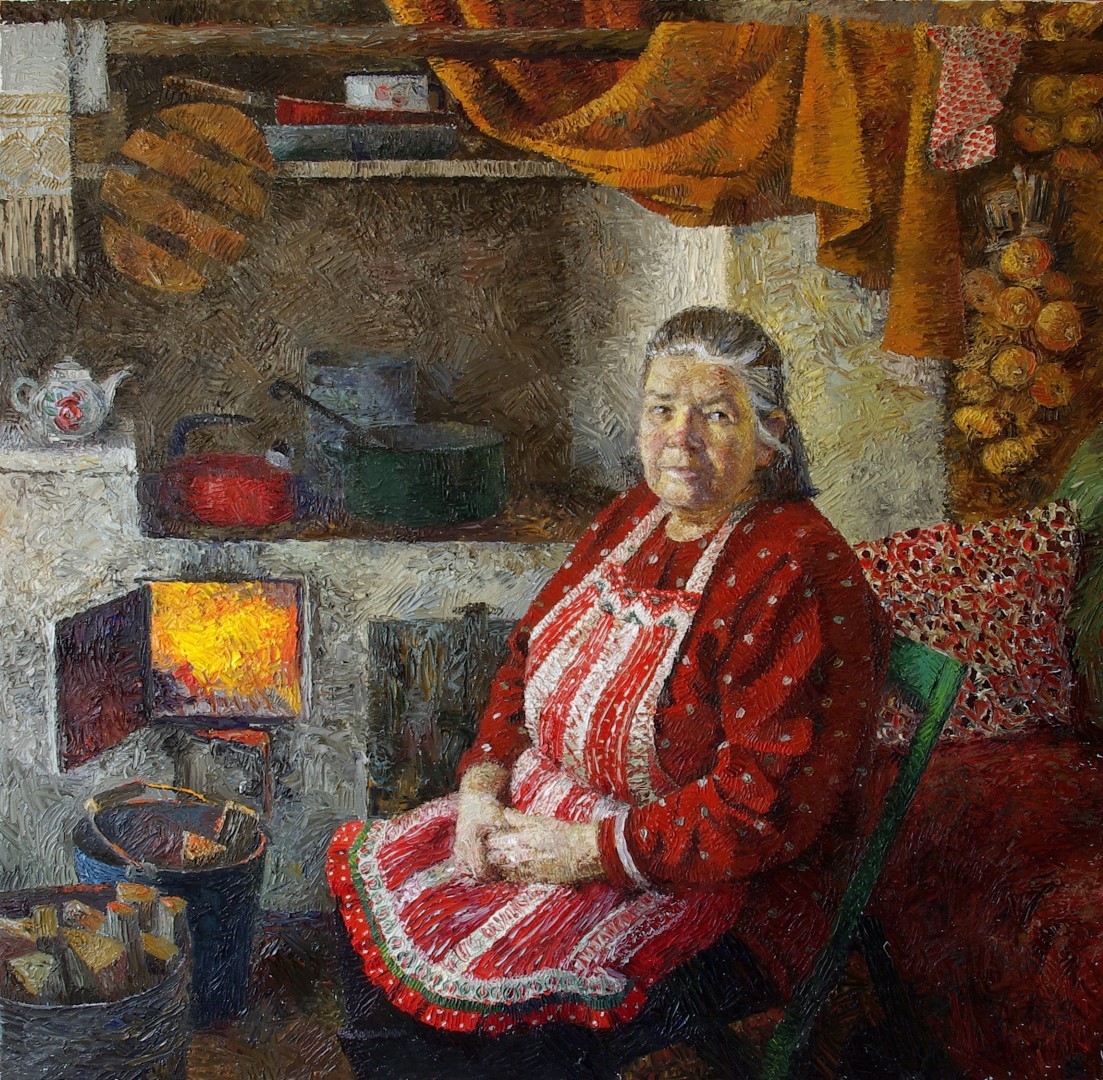
A particularly evocative example is the painting Near the Stove with Babushka, which depicts an elderly woman seated in a dark kitchen interior. The scene unfolds within a characteristic Russian rural setting rich in color. The gentle figure of the elderly woman, surrounded by her cooking utensils beside the open stove door where firewood is being placed, reveals the glow of a living flame—perhaps a flame from another time.

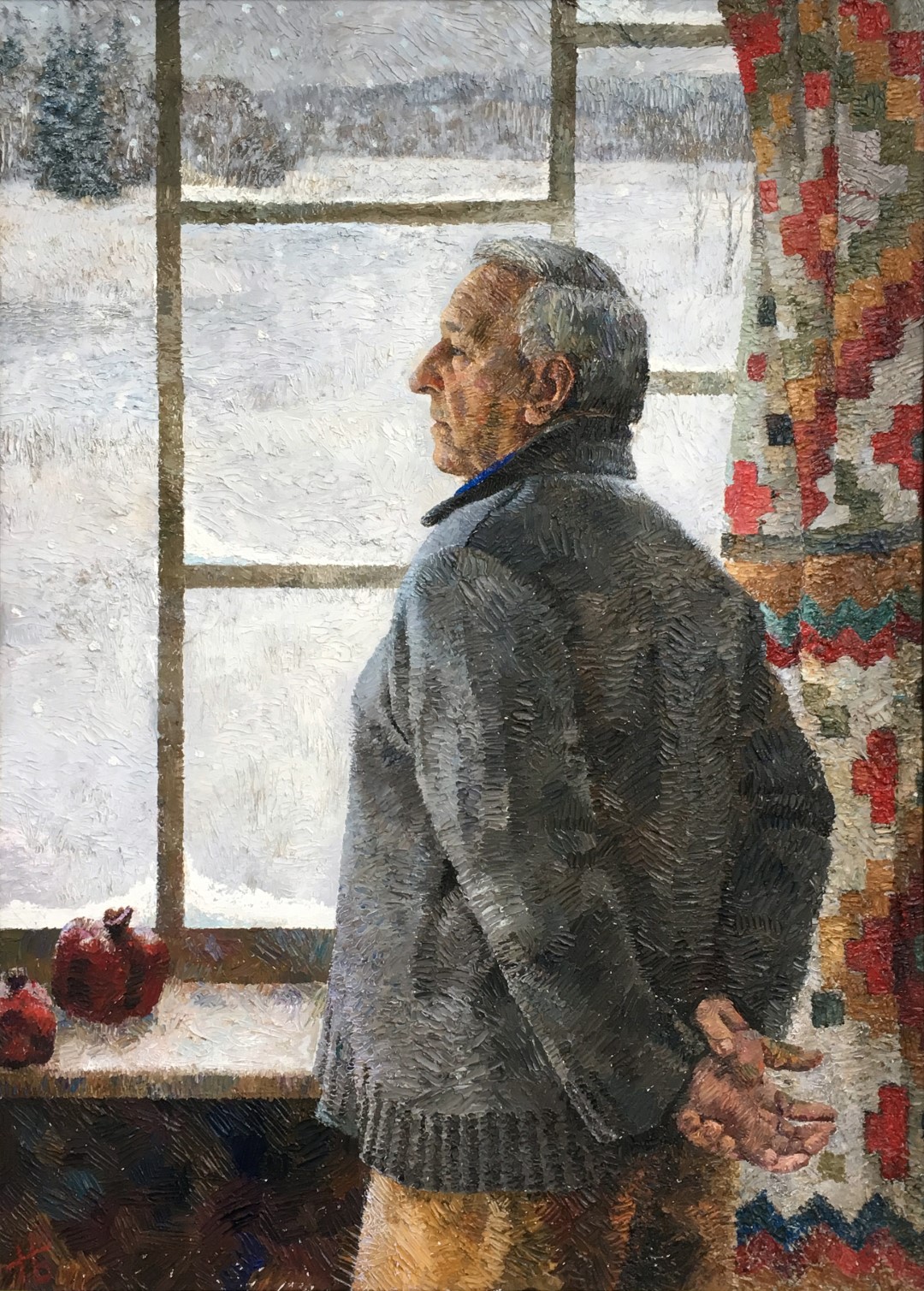
The painting Winter, featured on the catalogue cover, portrays an elderly man in a woolen cardigan standing before a multi-paned window. A richly decorated curtain partly covers the window, while most of it opens onto a snowy forest landscape. The motif subtly recalls the compositions of Johannes Vermeer, particularly his portraits of women positioned near windows.

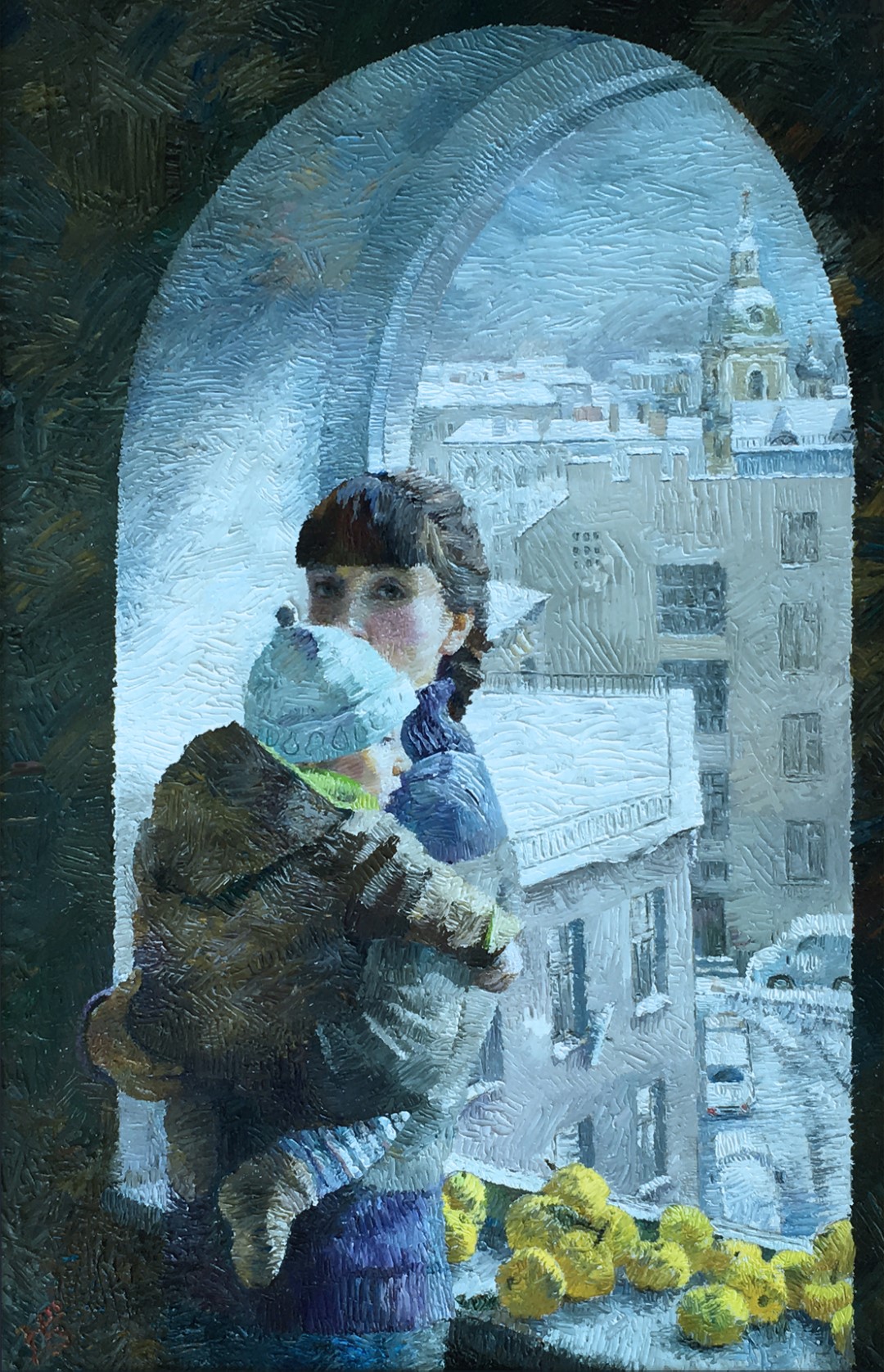
A comparable atmosphere appears in the painting First Snow, portraying a young mother holding a child in her arms before an arched window opening onto a snow-covered cityscape, once again evoking a nostalgic sense of a time long past.

In contrast stands the full-length portrait of a young woman in an autumn park. She is dressed in a vibrant woolen coat and wears a distinctive two-part hat composed of yellow and orange leaves.

Memories of childhood resonate in works such as Cold Waters of the Neva, Night. Petersburg, and Petersburg Night. Recollections of travel appear in cityscapes including Small Street (Warsaw), Hot Day, Magical Wrocław, Towards Sacré-Cœur, and Oriental Fairy Tale (Istanbul), among others.

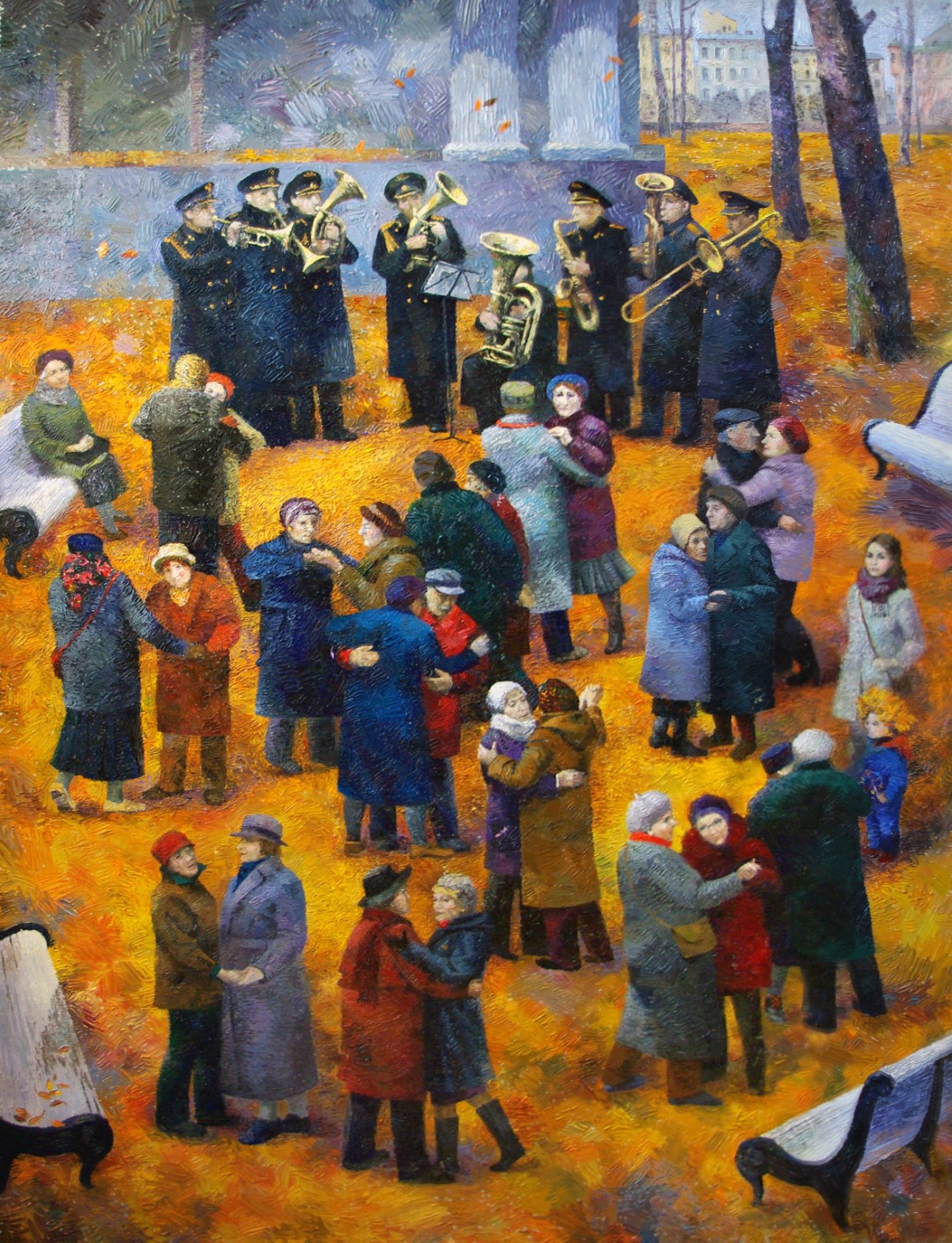
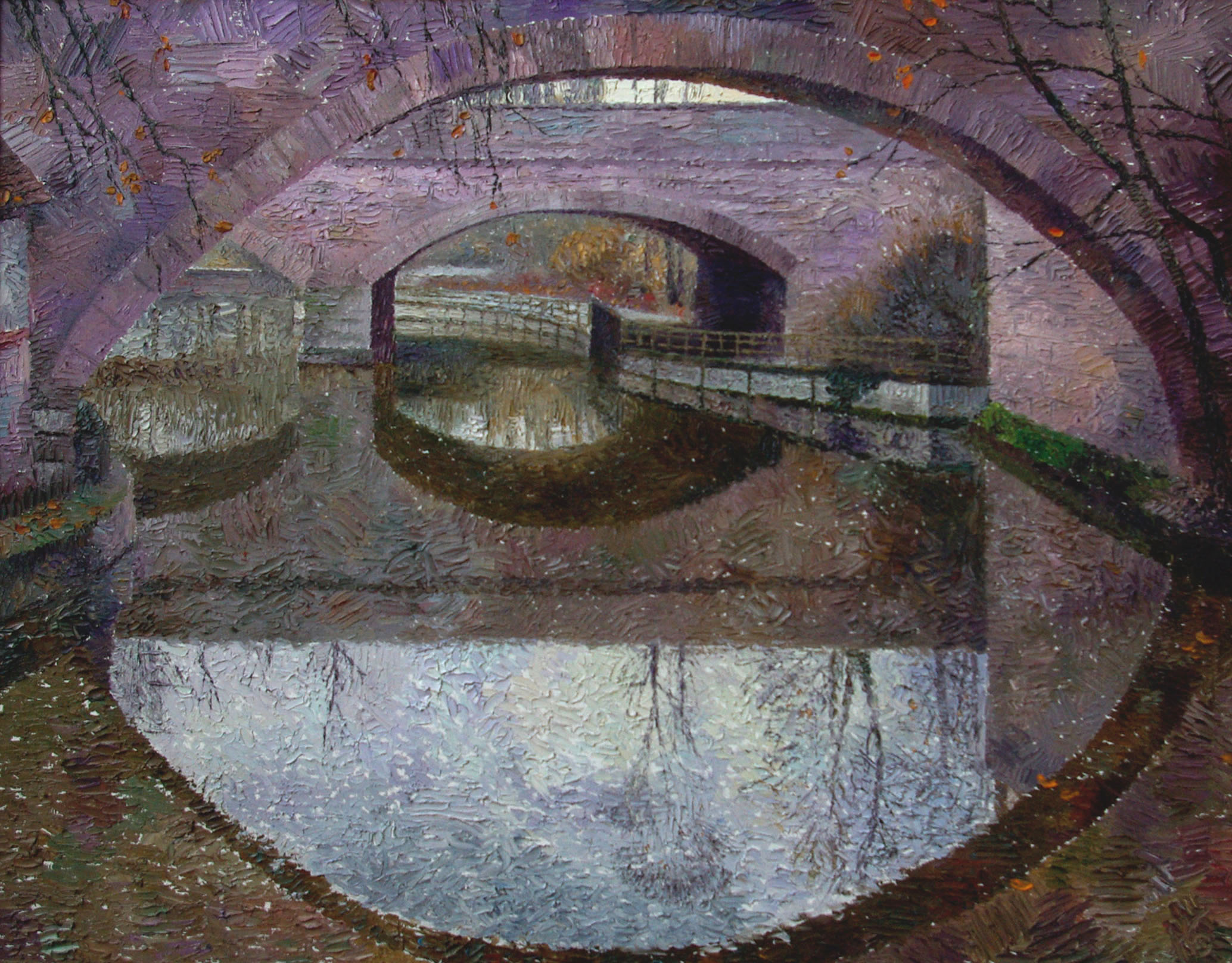
In addition to her distinctive subject matter, Bakovic employs a particular technique in the application of oil paint on canvas. Alongside traditional brushwork, she uses a special palette knife to model the surface of the painting, creating a textured effect that, when viewed up close, resembles coarse weaving or small-scale tapestries.

Through her refined portraits, landscapes, and city views, Natasha Bakovic reveals memories drawn from the depths of her inner world—memories into which the viewer may also enter, opening their own gaze toward the nostalgic topography of emotions created by this widely awarded artist.

— Mario Berdić Codella

English translation of the curatorial text from Slovenian.

“The emotional structure of Natasha Bakovic’s canvases carries its own tension: the artist uses juxtaposition and contrast, and when attuning the viewer’s eyes, there is a feeling of deep breathing of space. In this ability – combination of the personal, individual and fragile with the impersonal, extra-human, natural, elemental, juxtaposition of the small and the immeasurable, near and far, tender, like the first snow, the instant with the timeless, the unsteady with the structural, light – with gloomy – the peculiarity of her spiritual poetics is reflected, giving through contrast a subtle and precise cut to the visual image.

Reflecting on the polyphony of the registers of the painting “Red Birds”, by the will of the author’s creative imagination sprinkled bare branches of trees with feathers in the foreground and burning like sparks of ash from smoky clouds in the valley and around the distant mountains, I felt the charm of the following lines in a new way:

The earth is getting cold, the haze is approaching,
The lost distance has gone to the gate …
Somewhere the wind in the woods sings the dawn, –
Or sings it in my heart?
(„In the Evening”, Boleslav Lesmyan)

Natasha’s light and colors are like the a movement of the bow along the restrained embroidery of the landscape, and this bow, flexible and sharp, now soft and flowing, now striking the strings with a clear melodic pattern. The artist’s gaze, attentive to the details of things close to human everyday life, sees through them not only what is approaching the horizon, but also other, currently invisible planes of being, and it is with them that she strives to sew with her brush in paintings such as “When light snow is falling „, and pomegranates and apples on the windowsill tell us in the language of archetypes about what coexists in human destiny („First Snow”, „Winter. Vlado’s Portrait”) become symbols of a timeless mystery. And then the heart shrinks from the feeling of the preciousness of the moment
And I can’t understand life without age-old separation
With a consanguineous willow, with the secret of a forest flower.
(Boleslav Lesmyan. „I’m lying on my back in the clearing …”)

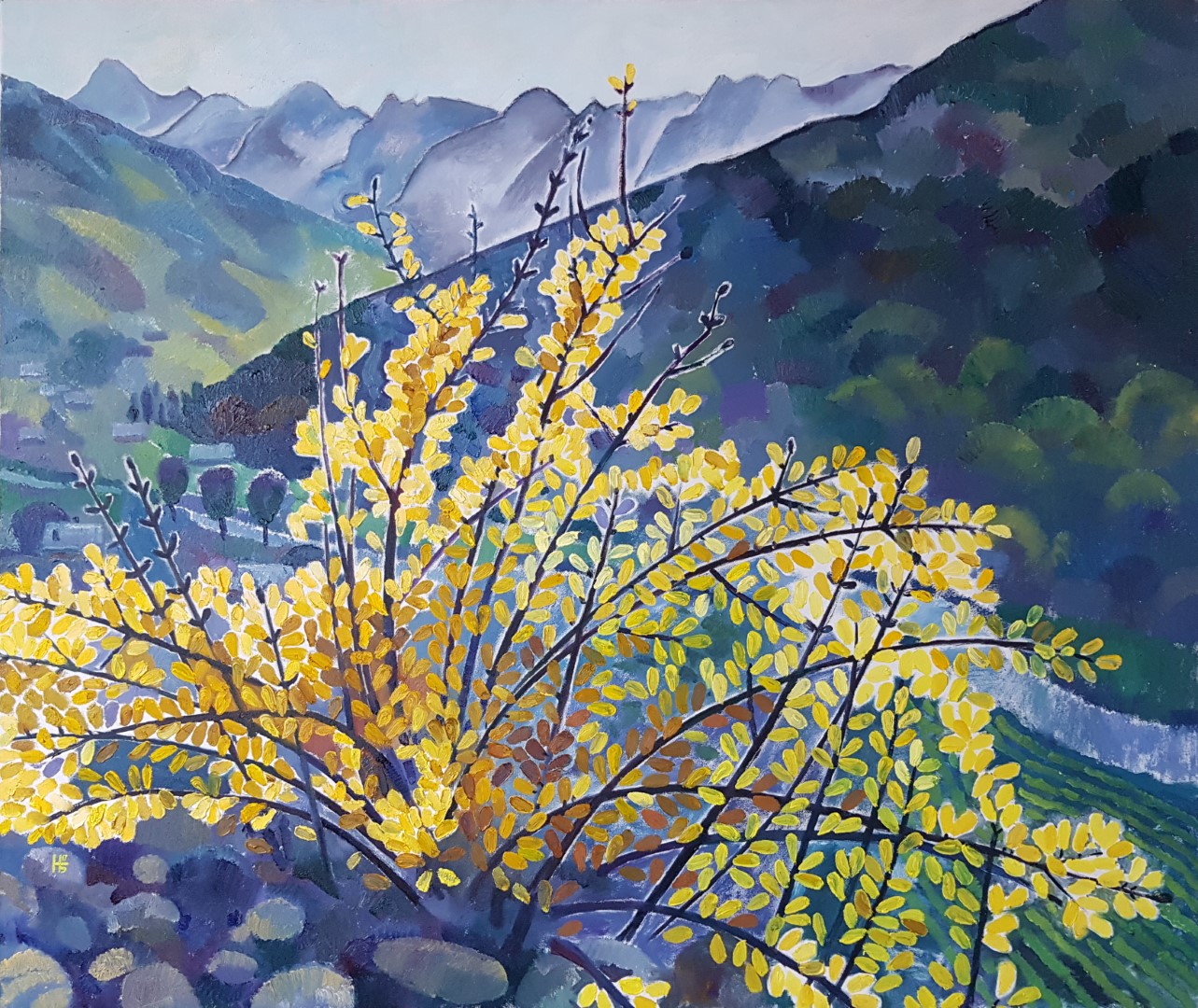
A bush glowing with amber and lemon light over a mountain panorama („April over Grand Bornand) – is this music of the lines” Memories „by Julian Tuwim revived?
… And only the autumn month was pleasing –
May mimosa is at a loss.

I fell asleep with him at dawn,
There were spring dreams – and tears
Smelled of willow bitterness, like these
Golden sprigs of mimosa. „

From the article “Seven colors of the rainbow / Consonance of pure joy” by art critic Valeria Ismieva, magazine “Literary Dating”, 2020, No. 1 (45), Moscow


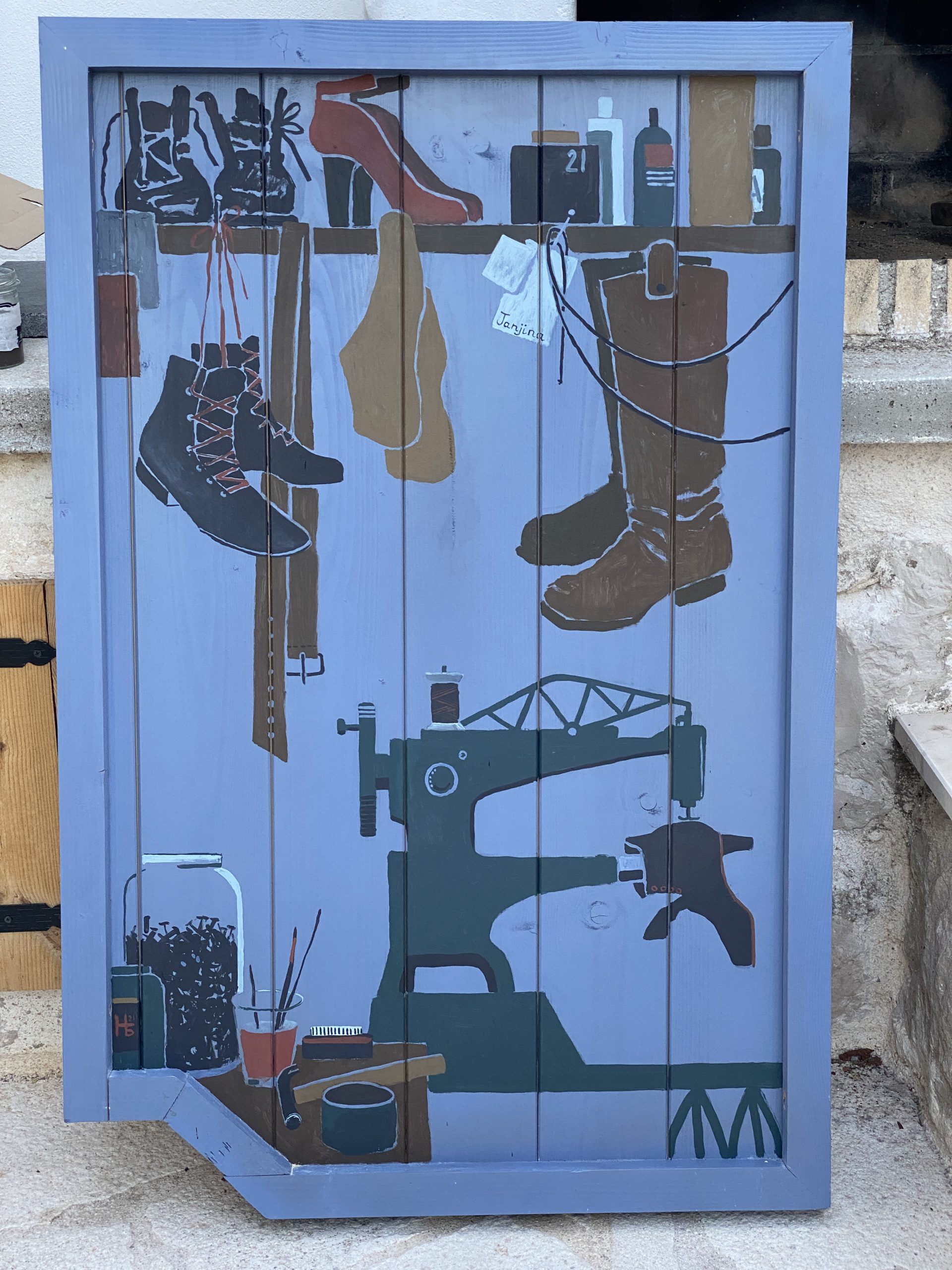
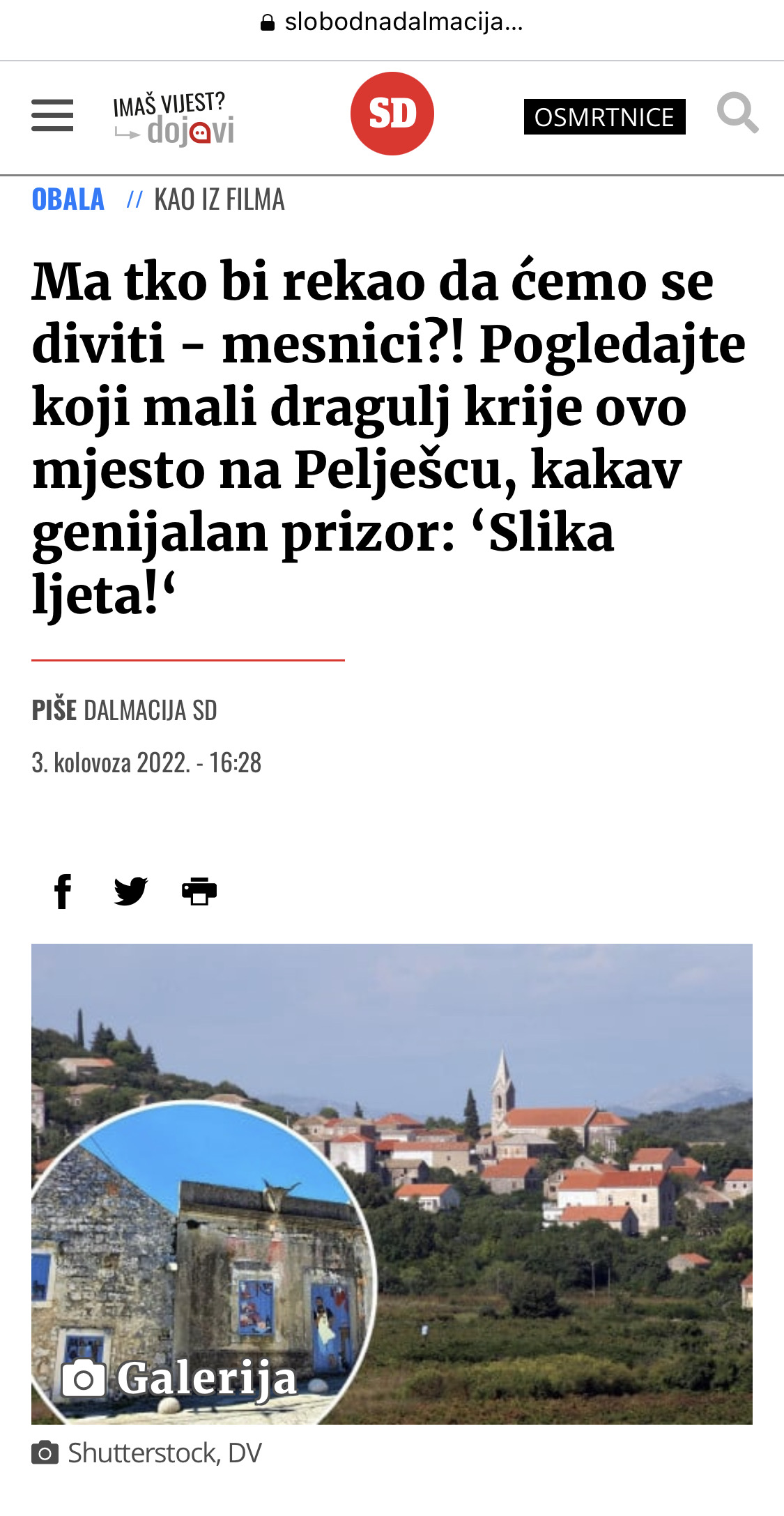
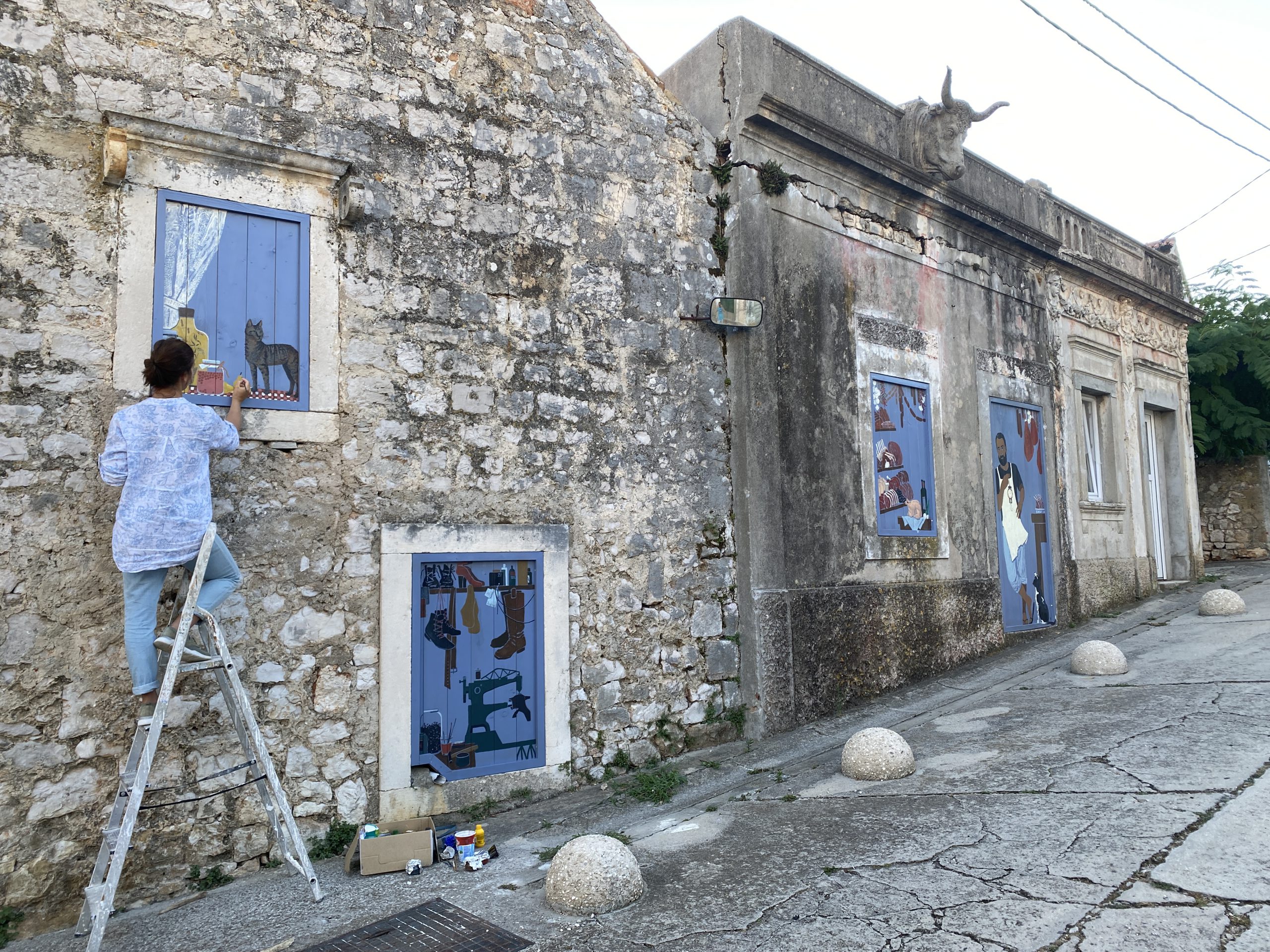
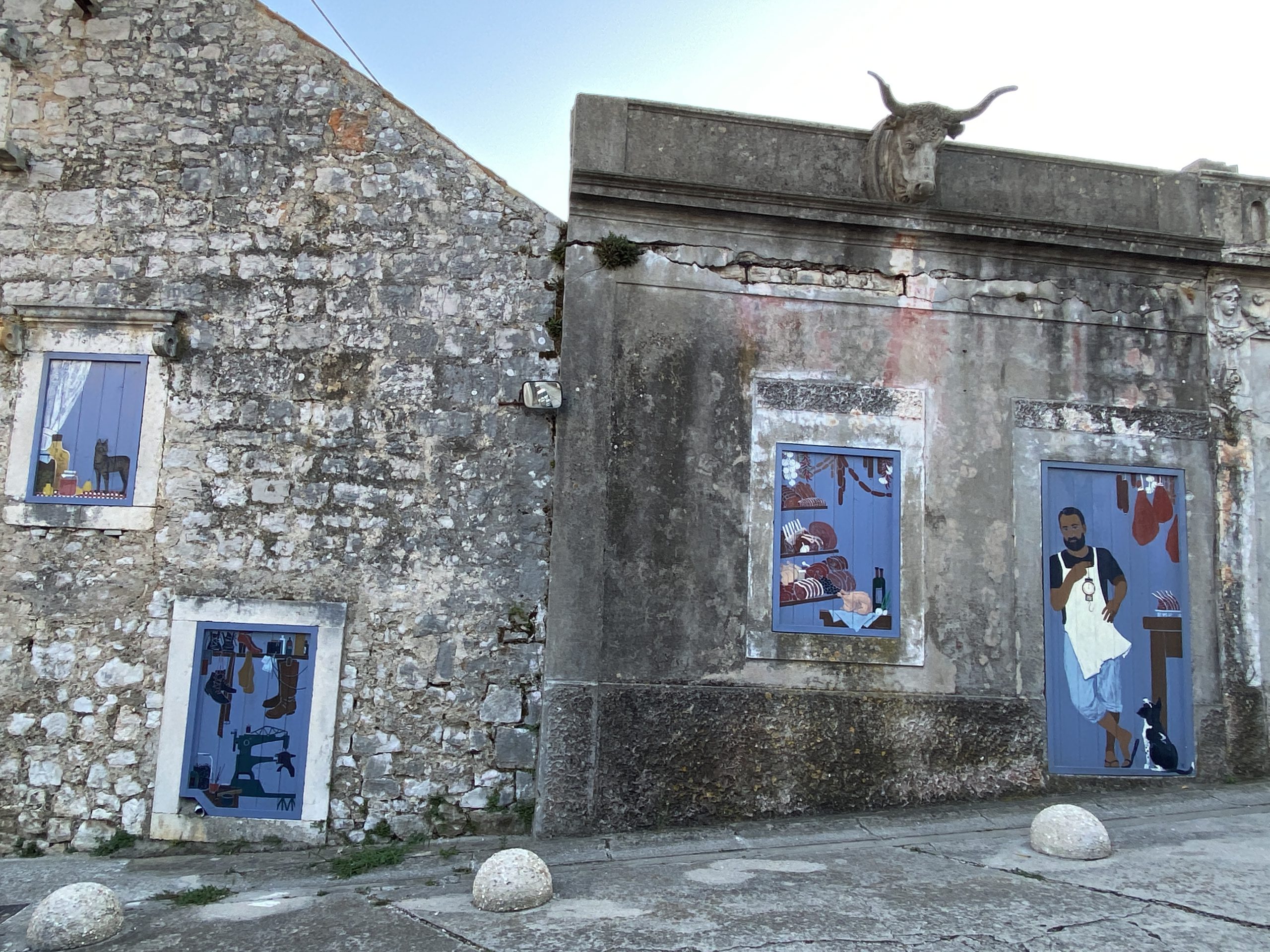
A newspaper article in "Slobodna Dalmacija" about Natasha Bakovic's project in the village Janjina in Croatia:
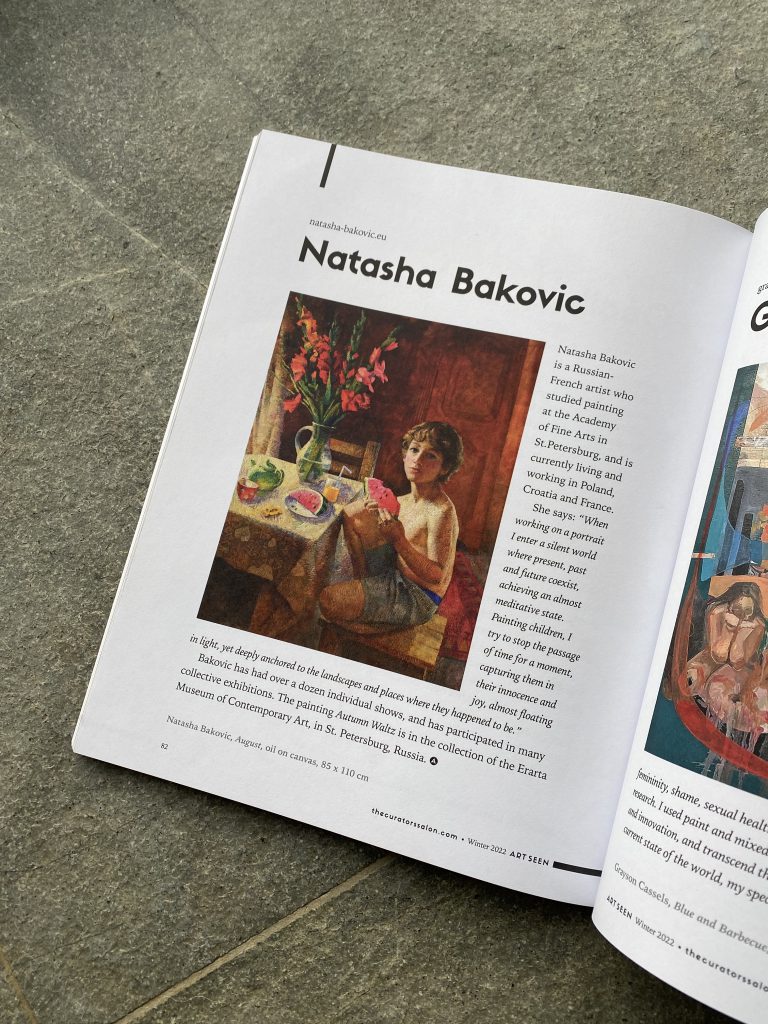
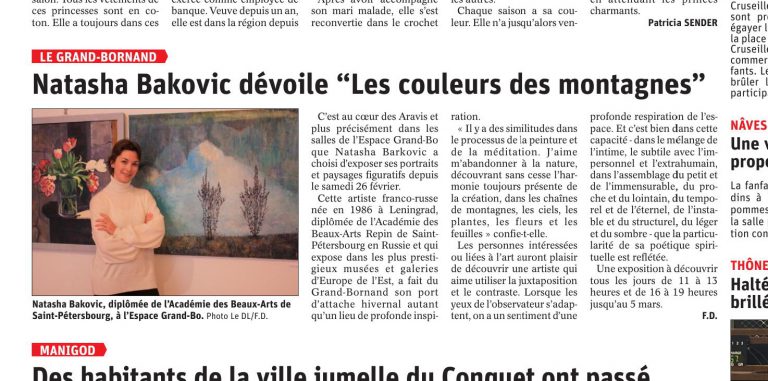
Le Dauphiné, 02/03/2022 "Natasha Bakovic reveals the colors of the mountains"
by Fabrice Duriez
Przewiń do góry